Styrofoam Food Box 3D Mockup Bundle
In the competitive landscape of food packaging design, visual presentation is often the deciding factor between a consumer choosing one brand over another. For graphic designers, branding agencies, and packaging specialists, creating realistic previews of product designs before physical prototyping is essential for client approval and marketing effectiveness. This is where digital tools like the Styrofoam Food Box 3D Mockup Bundle become indispensable assets in a designer’s workflow. By providing high-fidelity representations of packaging, these templates allow professionals to showcase their work with clarity and precision.
This article provides an objective evaluation of the Styrofoam Food Box 3D Mockup Bundle, exploring its technical specifications, practical applications, and value proposition for design projects. Whether you are evaluating this resource for personal use or considering it for agency-wide adoption, understanding its features and limitations will help you determine if it aligns with your specific needs.
Understanding the Product: What Is Included?
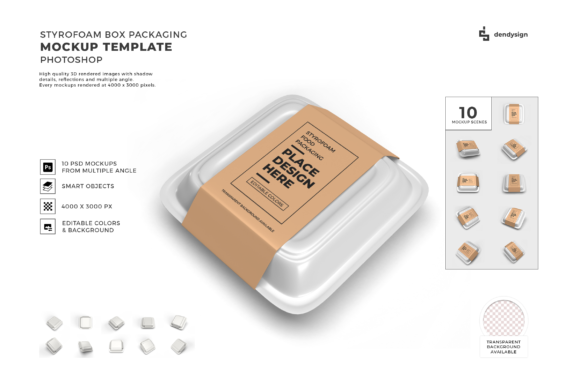
The core offering of the Styrofoam Food Box 3D Mockup Bundle is a collection of Photoshop (PSD) files designed to simulate real-world styrofoam takeout containers. Unlike flat vector illustrations, these mockups utilize layer styles, smart objects, and shadow mapping to create a three-dimensional effect within a two-dimensional software environment. The bundle typically includes various angles and configurations of standard clamshell containers, which are ubiquitous in the fast-food and catering industries.
Key technical attributes of this bundle include:
- High Resolution PSD File: The files are provided in Adobe Photoshop format at resolutions suitable for both screen display and high-quality print output. This ensures that fine details in logos and typography remain crisp.
- Easy to Edit: Utilizing Smart Objects, users can drag and drop their own artwork directly onto the box surfaces. This non-destructive editing method preserves the original image quality while applying realistic distortions and lighting effects.
- Organized Layers: A well-structured file hierarchy allows designers to isolate specific elements such as shadows, highlights, reflections, and background textures. This organization facilitates rapid customization without cluttering the workspace.
- Transparent Background Available: Most variations come with transparent backgrounds, enabling seamless integration into existing layouts, websites, or composite images without manual masking.
Evaluating the Benefits for Design Professionals
When assessing the Styrofoam Food Box 3D Mockup Bundle, it is important to look beyond the aesthetic appeal and consider the operational efficiencies it brings to a design project.
Accelerated Workflow and Time Efficiency
Creating a photorealistic mockup from scratch requires significant time investment in 3D modeling, texturing, and lighting setup. By using pre-made templates, designers can reduce the time spent on visualization by up to 80%. This efficiency allows more time to be allocated to creative iteration and client communication rather than technical rendering.
Enhanced Client Communication
Clients often struggle to visualize how a flat logo will appear on a curved, textured surface like styrofoam. Providing a realistic 3D mockup bridges this gap. It reduces ambiguity and minimizes the risk of costly revisions during the production phase. The ability to show a design in context helps clients make informed decisions quickly.
Cost-Effective Prototyping
Physical prototyping of packaging involves material costs, manufacturing fees, and shipping times. Digital mockups offer a near-zero marginal cost for generating multiple design variations. This is particularly beneficial for startups or small businesses that need to test different branding concepts before committing to large-scale production runs.
Considerations and Potential Tradeoffs
While the benefits are clear, no digital asset is without limitations. Evaluating the tradeoffs is crucial for setting realistic expectations.
Limited Customization Compared to True 3D Software
Although Photoshop mockups are sophisticated, they are fundamentally 2D simulations. They cannot replicate complex lighting scenarios, dynamic camera movements, or interactive views that true 3D software (such as Blender or Cinema 4D) can produce. If a project requires extreme realism or unique camera angles not covered by the template, the bundle may fall short.
Dependency on Photoshop Skills
The ease of use depends heavily on the user’s proficiency with Adobe Photoshop. Beginners may find navigating organized layers and understanding smart object workflows challenging. While the process is straightforward for experienced users, there is a learning curve for those new to digital mockups.
Generic Aesthetics
Standard styrofoam boxes are common, but this ubiquity can lead to generic-looking presentations if not styled carefully. To stand out, designers must invest effort in adding custom shadows, environmental context, or complementary props. Relying solely on the default template may result in visuals that blend in rather than capture attention.
Situational Fit: When to Use This Bundle
The Styrofoam Food Box 3D Mockup Bundle is a strong fit for specific scenarios:
- Fast-Casual Branding Projects: Restaurants and food trucks that rely on takeout packaging need to present their branding on delivery containers. This bundle provides the exact vessel consumers interact with.
- Portfolio Presentations: Designers showcasing packaging skills benefit from realistic mockups that demonstrate an understanding of material properties and real-world application.
- Marketing Collateral: Social media posts, website banners, and email campaigns require eye-catching visuals. High-resolution mockups enhance the perceived value of the brand.
- Client Pitch Decks: When pitching new packaging concepts, having ready-to-use templates allows for quick turnaround and professional presentation.
Alternatives to Consider
Depending on your specific requirements, other options might be more suitable:
- Custom 3D Rendering Services: For ultra-high-end campaigns requiring perfect lighting and unique angles, hiring a 3D artist may be worth the investment.
- Other Material Mockups: If your packaging involves cardboard, glass, or plastic, ensure you have mockups tailored to those specific textures. Styrofoam has a distinct matte, porous look that differs significantly from glossy or metallic finishes.
- DIY Photography: For some brands, authentic photography of actual products carries more trust and emotional resonance than digital renders. However, this option is slower and less scalable.
Practical Decision-Making Insights
To determine if the Styrofoam Food Box 3D Mockup Bundle is the right choice, ask yourself the following questions:
- Do I need speed and consistency? If you frequently produce packaging visuals, the time saved justifies the purchase.
- Is my team proficient in Photoshop? Ensure your designers are comfortable manipulating smart objects and layer styles.
- Does the resolution meet my output needs? Verify that the pixel dimensions are sufficient for your largest intended display size.
- Are the included angles relevant? Check if the bundle covers the perspectives your clients or marketing channels require.
Conclusion
The Styrofoam Food Box 3D Mockup Bundle offers a practical, efficient solution for designers seeking to elevate their packaging presentations. By leveraging high-resolution PSD files with organized layers and easy-editing capabilities, professionals can create compelling visuals that communicate design intent effectively. While it has limitations compared to advanced 3D modeling, its balance of quality, usability, and cost makes it a valuable tool for most design workflows. For those looking to streamline their packaging design process and enhance client communication, this bundle represents a sound investment in digital resources.