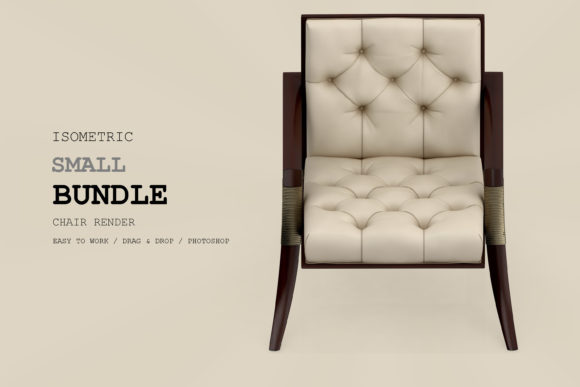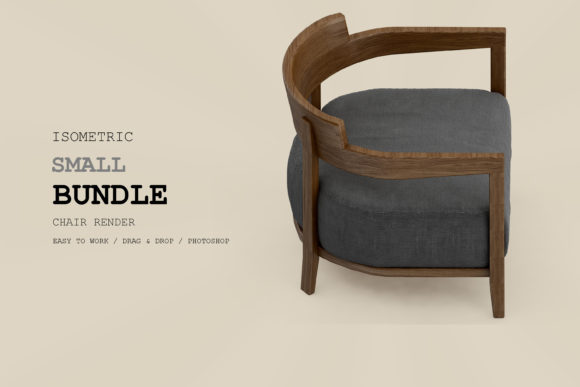
Isometric Armchair 3D Rendering Pack 27
In the landscape of digital content creation, visual consistency and high-fidelity assets are no longer optional luxuries; they are foundational requirements. For designers, architects, marketers, and educators, the ability to present complex spatial relationships clearly and attractively often determines the success of a project. This is where specialized asset packs become invaluable tools rather than mere decorations. Isometric Armchair 3D Rendering Pack 27 enters this space not as a generic collection of furniture models, but as a curated set of rendering-ready assets designed with specific technical and aesthetic standards in mind. It addresses a common pain point in isometric illustration: the struggle to maintain lighting coherence, layer organization, and print readiness across multiple design projects.
The core premise of this pack is utility. It targets professionals who need reliable, high-quality visuals that can be integrated seamlessly into larger compositions without requiring extensive post-processing or modeling work. By focusing on the armchair—a staple of interior design and lifestyle imagery—the pack provides a versatile element that anchors scenes ranging from cozy living rooms to modern office spaces. The inclusion of "Pack 27" suggests an iterative development process, implying that the assets have been refined based on previous feedback and evolving industry standards for resolution, file structure, and visual fidelity.
Technical Specifications and Workflow Efficiency
What distinguishes Isometric Armchair 3D Rendering Pack 27 from free or low-cost alternatives is its emphasis on workflow efficiency through technical precision. In professional environments, time is the most scarce resource. Assets that require significant cleanup, re-texturing, or manual shadow adjustment slow down production pipelines. This pack mitigates those bottlenecks by delivering files that are ready for immediate use in major graphic design software suites.
A critical feature is the provision of separated background. In isometric art, the background is often transparent or intentionally minimal to allow the foreground elements to stand out. Having the armchair rendered with a clean separation ensures that it can be dropped into any composition—whether a dark mode interface, a bright marketing banner, or a detailed architectural floor plan—without unwanted artifacts or color fringing. This separation is not merely a cutout; it preserves the integrity of the edges and shadows, maintaining the illusion of depth.
Furthermore, the pack boasts high resolution capabilities with a DPI of 300. This specification is non-negotiable for print projects. Many digital assets are optimized for screen display (72–96 DPI), which results in pixelation when scaled up for posters, brochures, or large-format displays. A 300 DPI standard ensures that the textures of the fabric, the grain of the wood, and the sheen of the metal components remain crisp and clear, regardless of the output size. This makes the pack suitable for both web-based presentations and tangible marketing materials.
Organized Layers and Separated Shadows
For users working in layered environments such as Adobe Photoshop or Illustrator, the organizational structure of the source files is paramount. Isometric Armchair 3D Rendering Pack 27 features organized layers, which allows designers to isolate specific components of the chair. Whether one needs to change the upholstery color, adjust the angle of the armrest, or remove the base entirely, the ability to manipulate individual elements without reconstructing the entire model saves hours of labor. This modularity transforms a static image into a dynamic component that can adapt to various branding guidelines or design themes.
Equally important is the inclusion of a separated shadow. In isometric projection, lighting direction must be consistent across all objects in a scene to create realism. If a designer manually places a shadow under each object, inconsistencies in angle, opacity, and blur can break the visual logic of the illustration. By providing a pre-rendered, separated shadow layer, the pack ensures that the armchair appears grounded and physically plausible within any context. Designers can adjust the shadow’s position slightly if needed, but the fundamental lighting physics are already resolved, reducing cognitive load and ensuring visual harmony.
Practical Applications Across Industries
The versatility of Isometric Armchair 3D Rendering Pack 27 allows it to serve a wide array of professional and creative needs. Its application extends far beyond simple decoration, acting as a functional tool for communication and persuasion in various fields.
- Architecture and Interior Design: Architects and interior designers frequently use isometric views to communicate spatial layouts to clients who may not be familiar with technical blueprints. The realistic rendering of the armchair helps clients visualize how furniture will fit into a room, enhancing the decision-making process. The high resolution ensures that these presentations look professional and polished during client meetings.
- Social Media and Digital Marketing: In the fast-paced world of social media, attention spans are short. High-quality, visually engaging images perform better in terms of engagement metrics. Marketers can use these armchairs to create lifestyle-oriented posts for furniture brands, home decor blogs, or real estate listings. The separated background makes it easy to overlay text or other graphical elements, creating eye-catching banners and ads.
- Educational Materials and School Projects: Educators and students benefit from clear, accurate visual aids. In subjects ranging from interior design theory to basic geometry and perspective drawing, isometric illustrations provide an excellent medium for explaining concepts. The organized layers allow instructors to deconstruct the chair for teaching purposes, showing how different parts contribute to the whole structure.
- Web Design and User Interfaces: Modern web design often incorporates isometric icons and illustrations to add depth and interest to landing pages and dashboards. The high-resolution assets ensure that graphics look sharp on retina displays and mobile devices. The separated shadow and background facilitate smooth integration into UI/UX designs, allowing for interactive hover states or animated transitions.
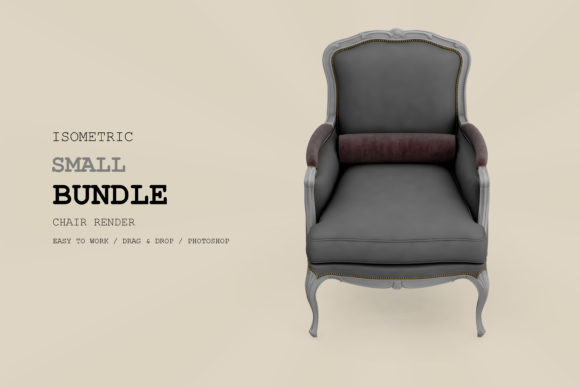
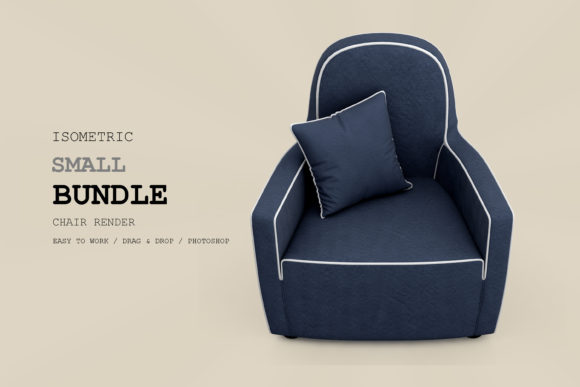
- Print Publications and Advertisements: As noted, the 300 DPI resolution makes these assets ideal for print. Magazines, catalogs, and flyers require high-quality imagery to convey texture and quality. An armchair rendered with realistic fabric details and proper lighting can significantly enhance the perceived value of a product being advertised.
Evaluating Long-Term Value and Limitations
When considering the acquisition of Isometric Armchair 3D Rendering Pack 27, it is essential to weigh its strengths against potential limitations. The primary strength lies in its consistency and readiness. For freelancers and small agencies, having a library of pre-vetted, high-quality assets reduces the risk of project delays caused by poor-quality downloads or incompatible file formats. The inclusion of a help file further supports usability, guiding users through installation, licensing, and best practices for integration. This documentation is often overlooked but is crucial for efficient onboarding, especially for less experienced designers.
However, users should be aware that while the assets are highly polished, they are still specific representations. The style of the armchair may not align with every aesthetic vision. For instance, a brand seeking ultra-minimalist or abstract geometric styles might find the realistic rendering too detailed or traditional. Additionally, while the layers are organized, customizing the geometry of the chair itself (e.g., changing the shape of the legs) would require advanced 3D modeling skills, as the pack likely provides rendered images or vector paths rather than editable 3D mesh files. Understanding this distinction is vital for setting realistic expectations about what can be achieved with the assets.
Another consideration is the file format compatibility. While most professional packs support standard formats like PSD, AI, or PNG, users should verify that their specific software versions are compatible. Older versions of design software may struggle with newer layer effects or transparency settings, potentially leading to minor rendering issues that require manual adjustment.
Conclusion on Usability
Isometric Armchair 3D Rendering Pack 27 represents a thoughtful investment for professionals who prioritize quality, efficiency, and visual accuracy. It is not a one-size-fits-all solution, but rather a specialized tool designed to elevate the standard of isometric illustrations in various contexts. By offering separated backgrounds, high-resolution outputs, organized layers, and consistent lighting, it removes many of the technical hurdles associated with creating professional-grade isometric art.
For architects, marketers, educators, and designers looking to streamline their workflow and produce compelling visual content, this pack provides a robust foundation. Its suitability for both digital and print mediums, combined with its ease of integration, makes it a valuable addition to any creative toolkit. Ultimately, the value of the pack is measured by how well it serves the user’s specific goals, and for those needing reliable, high-fidelity isometric elements, it stands out as a practical and effective choice.